

The story
My story, in five chapters
My story has 5 chapters. You couldn't fit this on a CV, but it's the sauce that flavours everything I touch.
Btw, you can collapse and expand each chapter to see less or more. I recommend more.
01HondurasCholuteca, a very limited budget, and a question I kept asking: why not?
Keep going. Do not give up because other people tell you it cannot be done.
I was born in Choluteca, Honduras, and grew up there with my grandparents. We did not have many financial resources. I remember living on what I now understand was a very limited monthly budget, and sometimes I still wonder how they managed to provide everything we needed. But as a child, I never felt poor. I felt cared for and loved. That distinction has stayed with me.
By the time I was around twelve or thirteen, the internet had become much more than entertainment. I started using it to learn independently: technology, economics, finance, artificial intelligence, soft skills. I kept asking myself a simple question: why not? If there was no real reason something could not be done, I wanted to find out how to do it.
At fourteen, languages became especially important to me. Around the same age, I also started teaching. I was fourteen years old and teaching people who were twenty, thirty, forty, fifty, or even sixty.
For a long time, studying abroad looked unrealistic to many people around me. I wanted it anyway. I studied at night. I worked. I volunteered. I learned languages. I worked on my grades and eventually finished with a perfect academic average.
I failed twice. On the third attempt, I made it through.
Read the full chapterShow less
I was born in Choluteca, Honduras, and grew up there with my grandparents.
My childhood home was a peaceful place. There was love, stability, and a strong sense of values and principles. My family was hardworking, and from a very young age I was taught that if I wanted something, I had to work for it. My grandparents, my mother, and my uncles were always present in my life.
We did not have many financial resources. I remember living with my grandparents on what I now understand was a very limited monthly budget, and sometimes I still wonder how they managed to provide everything we needed. But as a child, I never felt poor. I felt cared for and loved. That distinction has stayed with me.
I was also extremely curious. I wanted to understand how things worked and what existed beyond what I could see around me. Technology fascinated me. I spent time around my uncle's computer, played video games, and became interested in the internet at a time when it started giving me access to a much larger range of information and people.
By the time I was around twelve or thirteen, the internet had become much more than entertainment for me. I started using it to learn independently. I studied technology, economics, finance, artificial intelligence, Microsoft tools, and soft skills. Platforms such as Platzi became an important part of how I educated myself outside school.
I kept asking myself a simple question: why not? If there was no real reason something could not be done, I wanted to find out how to do it.
At fourteen, languages became especially important to me. I understood that speaking another language meant being able to communicate with more people, understand other cultures, and access opportunities that would otherwise remain unavailable. I learned English largely through my own effort and began meeting people from different backgrounds.
Around the same age, I also started teaching. I was fourteen years old and teaching people who were twenty, thirty, forty, fifty, or even sixty. What started as something I enjoyed became an important part of my life. Teaching allowed me to communicate, learn from other people, and continue developing myself while helping someone else develop too.
Growing up in Honduras also made me very aware of limitations. Professional opportunities felt limited, security was a concern, and I did not have many people around me who were thinking about the kind of international future I imagined for myself. Much of that perspective had to come from what I discovered online and from people I chose to learn from.
I became interested in people who challenged established ways of doing things. Technology founders and business leaders caught my attention because they showed me that existing systems were not the only possible way of building something.
For a long time, studying abroad looked unrealistic to many people around me. I wanted it anyway.
I studied at night. I worked. I volunteered. I learned languages. I met people. I worked on my grades and eventually finished with a perfect academic average. I went through applications, online exams, financial limitations, and all the preparation required to compete for an opportunity outside Honduras.
I failed twice. On the third attempt, I made it through.
My parents believed in me. My grandparents believed in me. Despite hearing from many others that what I wanted was unlikely or impossible, I continued.
I did not originally know that this path would take me to Germany. What I knew was that I wanted access to more opportunities, more cultures, more people, and an environment where I could continue developing independently. I also wanted to create better opportunities for my family and for myself.
Leaving Honduras did not make Honduras less important to me. Today, what I value most is my family, the culture I grew up with, and the values I received at home. A large part of my personality comes directly from them.
Honduras 02TeachingFourteen years old, teaching adults, and learning that the goal is not to look clever.
What keeps me teaching is the contact with people, the opportunity to help someone progress, and everything I continue learning from them in return.
I started teaching when I was fourteen. At that age, I was told that it was unrealistic. I was too young, I had no professional experience, and there was no obvious reason why someone older than me should trust me as a teacher. They were right about one thing: I did not have experience. But I wanted to try anyway.
I created my first CV in English and Spanish and started sending applications. Eventually, an academy in Chile gave me an opportunity to teach English. My first students were older than me, sometimes much older, so I approached the work with humility. I was not trying to prove that I knew everything. I wanted to help people use what I did know.
Over the years, I have taught students from Chile, Colombia, China, Honduras, the United States, El Salvador, Paraguay, Canada, and Brazil. I taught English, Spanish, German, and introductory Chinese, and at different moments I used one language to explain another.
More importantly, I learned patience. Not everyone learns at the same speed. For me, the goal is not to demonstrate knowledge. The goal is for the other person to understand.
Years later, at Constructor University, I became a Teaching Assistant for an introductory supply chain management course with approximately 108 students in a single class. It reinforced something I had already started learning: leadership does not mean controlling people. It means understanding them.
Read the full chapterShow less
I started teaching when I was fourteen.
At that age, I was told that it was unrealistic. I was too young, I had no professional experience, and there was no obvious reason why someone older than me should trust me as a teacher. They were right about one thing: I did not have experience. But I wanted to try anyway.
I created my first CV in English and Spanish and started sending applications. Eventually, an academy in Chile gave me an opportunity to teach English.
My first students were older than me, sometimes much older. Teaching adults while I was still a teenager was intimidating. I knew that I had less life experience than the people sitting in front of me, so I approached the work with humility. I was not trying to prove that I knew everything. I wanted to help people use what I did know.
From the beginning, I preferred conversations over rigid lectures. I listened to my students, tried to understand what they needed, and treated the class as a practical conversation rather than a one-way lecture.
Teaching gave me an opportunity to share what I was learning while also meeting people from different backgrounds and cultures. Many of my students eventually became people I genuinely cared about. What began with a few classes became part of my daily life. I gradually started working with more students and other academies, while also teaching independently.
Over the years, I have taught students from countries including Chile, Colombia, China, Honduras, the United States, El Salvador, Paraguay, Canada, and Brazil. Most of those classes were online, although I also delivered some in-person seminars in Honduras.
Languages became a central part of the experience. I taught English, Spanish, German, and introductory Chinese, and at different moments I used one language to explain another. I also taught introductory mathematics and physics.
Some of my students were children. Others were working professionals. Some were immigrants trying to improve their language skills because communication was directly connected to their ability to work, integrate, and continue building their lives in a new country. I also taught children in China, sometimes waking up during the night because of the time difference.
Teaching people from different cultures required adaptation. A doctor did not need the same examples as an engineer. A child did not learn in the same way as an adult. I learned to use games, videos, practical exercises, and later artificial intelligence tools to adapt lessons to individual students.
More importantly, I learned patience. Not everyone learns at the same speed. I worked with students who needed significantly more time to understand certain concepts, and those situations taught me that explaining something once is not enough. The responsibility of the teacher is to find another way to communicate it.
For me, the goal is not to demonstrate knowledge. The goal is for the other person to understand.
Years later, teaching became part of my university experience as well. At Constructor University, I became a Teaching Assistant for an introductory supply chain management course with approximately 108 students in a single class.
My responsibilities included preparing materials and exercises, running tutorials, answering questions, supporting students with assignments and grades, responding to emails, and serving as one of their first points of contact when they needed help understanding the course.
Working with a large and highly international group reinforced something I had already started learning years earlier: leadership does not mean controlling people. It means understanding them. Some students learned quickly. Others required additional explanations and time. My responsibility was to make sure that each person had a fair opportunity to understand the material and complete the semester successfully.
The feedback from both the professor and the students was positive, but the most important result for me was understanding how much teaching had changed the way I work. It taught me to communicate carefully, to listen before explaining, and to recognize the human side of leadership.
Even if teaching never becomes my primary profession, I want it to remain part of my life. I want to continue teaching as a hobby, work with students, and eventually speak at universities.
Teaching 03Constructor UniversityA year of applications, two rejections, and the third one that worked.
Constructor is where the future I had been preparing for became real, and where I learned that reaching an opportunity is only the beginning of what you have to do with it.
The application took about a year. I had to gather documents, prepare my academic record, take the SAT several times, complete tests, and pursue scholarship opportunities. Based on my academic performance, I received the maximum scholarship amount available to me from the university.
When the time finally came to leave Honduras, my father traveled with me. It was my first trip outside the country. For my family, financing that transition was difficult. That made the acceptance more than an academic result. It confirmed that years of preparation had produced a real opportunity.
I initially entered university intending to study Mathematics, then realised I was more motivated by applied problems. I changed to Industrial Engineering and Management, and that became one of the best academic decisions I have made.
Arriving in Germany was a major cultural adjustment. I had to learn how to live independently while missing my family intensely. The most difficult part has consistently been being far from my family. I do not treat that as insignificant. I accept it because the objective is clear.
For me, Constructor represents the transition from adolescence into adulthood. It is where an international future stopped being an idea and became daily life.
Read the full chapterShow less
Getting from Honduras to Constructor University in Germany was the result of a long application process and a decision my family and I had worked toward for years.
The application took about a year. I had to gather documents, prepare my academic record, take the SAT several times, complete tests, and pursue scholarship opportunities. Based on my academic performance, I received the maximum scholarship amount available to me from the university.
When the time finally came to leave Honduras, my father traveled with me. It was my first trip outside the country. We traveled through Europe, including Switzerland and Hamburg, before arriving in Bremen for the beginning of my studies.
For my family, financing that transition from Honduras to Germany was difficult. That made the acceptance more than an academic result for me. It confirmed that years of preparation had produced a real opportunity.
I initially entered university intending to study Mathematics. Once I began the program, I realized that I did not yet have the preparation I needed for the path I had chosen and that I was more motivated by applied problems. I changed to Industrial Engineering and Management, and that became one of the best academic decisions I have made.
Industrial Engineering and Management gave me the combination I was looking for: engineering, analytical thinking, operations, business, and practical application. Courses such as logistics and operations research challenged me and showed me how technical decisions connect to real organizations. My interest in Data Science as a minor grew from the same place: I wanted to understand artificial intelligence, data, and the technologies increasingly used to make decisions.
Arriving in Germany was a major cultural adjustment. The language, food, cities, safety, working culture, rules, and everyday expectations were different from what I had known in Central America. At the same time, Constructor gave me daily contact with people from countries, languages, and cultural backgrounds I had previously encountered mostly online.
I had to learn how to live independently while missing my family intensely. I stayed in close contact with my grandparents and the people I loved, while reminding myself why I had come: to graduate, continue developing, and create more options for my family and for myself.
I tried to use the opportunities around me rather than remain only a student attending classes. I became involved in university clubs, worked to support other students, pursued campus responsibilities, became a Teaching Assistant, and looked for ways to build professional experience while studying.
The friendships and teams I worked with were as important as many of the classes. Eating together, solving problems, helping one another, and working with people from very different backgrounds changed how I communicate and how I understand other perspectives.
Constructor also forced me to become more disciplined and more critical in my thinking. I had to manage academic pressure, work, responsibilities, and personal relationships without the family support system that had always been physically close to me in Honduras.
The most difficult part has consistently been being far from my family. I do not treat that as insignificant. I accept it because the objective is clear: complete my education, continue building a professional life, and use those opportunities responsibly.
For me, Constructor represents the transition from adolescence into adulthood. It is where an international future stopped being an idea and became daily life. It is also where I began connecting engineering, data, teaching, work, and leadership into a clearer professional direction.
My current goal is to continue that development in Germany, pursue graduate study, and eventually complete a doctorate. I am particularly interested in continuing toward a master's degree in Management and Technology at the Technical University of Munich.
Constructor University 04My Career at Siemens EnergyWhat changes when a mistake stops costing you a grade and starts costing someone their day.
Siemens Energy showed me what professional responsibility looks like when the work is real, interconnected, and accountable to other people.
My first working-student position did not come quickly. I spent about a year applying, interviewing, and hearing no before I received an opportunity with Siemens Energy. In the final stage, I met the manager I would work with, and our conversation moved across English, German, and Spanish.
I joined as a Working Student in Administrative Support, working closely with resource management and operational processes: following processes in SAP, assisting with technician orders and training bookings, and keeping information moving between the people responsible for different parts of the operation.
The difference between university work and corporate work became clear very quickly. At university, an error usually affects an assignment or a grade. In a company, an error can affect another person's work, a process, a schedule, or an operational decision.
One of the most valuable parts has been working alongside people with ten or twenty years of professional experience. I can contribute my own perspective as a younger colleague, including languages, technology, and newer tools, while learning from people who understand the organization at a much deeper level.
Read the full chapterShow less
My first working-student position did not come quickly. I spent about a year applying, interviewing, and hearing no before I received an opportunity with Siemens Energy.
The process included several interviews. In the final stage, I met the manager I would work with, and our conversation moved across English, German, and Spanish while we discussed my skills and the role. Receiving the offer meant that I had finally converted the work I had been doing at university into my first substantial corporate opportunity in Germany.
I joined Siemens Energy as a Working Student in Administrative Support, working closely with resource management and operational processes. My work includes supporting resource managers and operations coordinators, following processes in SAP, assisting with technician orders and training bookings, helping coordinate required trainings, and keeping information moving between the people responsible for different parts of the operation.
I also use tools such as Excel, Power BI, SAP, and artificial intelligence to organize information, analyze tasks, and support the team's work. A major part of the role is communication: understanding what different people need, following up, and making sure requested work is completed correctly and on time.
The difference between university work and corporate work became clear very quickly. At university, an error usually affects an assignment or a grade. In a company, an error can affect another person's work, a process, a schedule, or an operational decision. That required me to become much more careful with details and more conscious of the consequences of my work.
Remote work also strengthened my independence. When I am working away from the office, I have to structure my own time, maintain communication with several stakeholders, and make sure that responsibilities move forward without someone constantly checking each step.
During the summer of 2026, I worked full-time. That meant giving up the possibility of using that period to visit my family, but it also gave me more time inside the organization and more exposure to how experienced professionals manage their responsibilities.
One of the most valuable parts of Siemens Energy has been working alongside people with ten or twenty years of professional experience. I can contribute my own perspective as a younger colleague, including languages, technology, and newer tools, while learning from people who understand the organization and the industry at a much deeper level.
The role has developed my skills in analysis, communication, Excel, Power BI, SAP, resource management, organization, corporate processes, and professional collaboration. It has also shown me a working environment in which employee rights, structure, and well-being are treated differently from many of the working conditions I had seen or heard about in Central America.
Professionally, Siemens Energy helped me understand that I enjoy office-based work, coordinating people, improving processes, supporting projects, and eventually leading teams. I like being responsible for work that has a practical outcome and requires both technical understanding and communication.
For me, Siemens Energy represents professional opportunity and continued progress. I want to keep learning, contribute seriously to the organization while I am there, and use the experience to become a more capable professional.
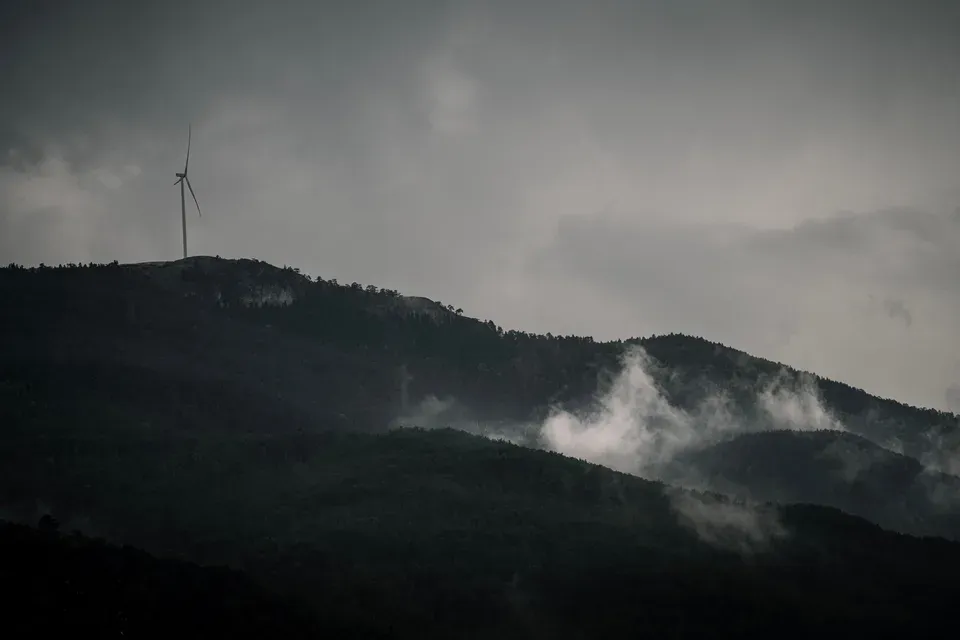
Wind turbines, the reason the paperwork matters 05What comes nextMunich, a master's, and the part I have not done yet.
I am looking for opportunities to learn, build, lead, and create practical opportunities for other people as I continue creating them for myself.
My immediate goal is to finish my degree, complete my thesis, and continue building professional experience in Germany. I want to remain in Europe and, if possible, move to Munich.
Professionally, I do not see my interests as belonging to only one narrow field. I want to lead teams, manage projects, build products and systems, analyze data, work on strategy, and eventually create companies of my own. I want ideas to become operating businesses and useful projects rather than remain only plans.
My current objective is to pursue a master's degree in Management and Technology at the Technical University of Munich and, later, potentially a doctorate.
My professional life may be based in Germany and Europe, but Honduras remains part of what I want to build. I am especially interested in young people who believe that international education, professional growth, or building a company is unavailable to them. I know what it is like to look for information and opportunities without having a clear local path.
Read the full chapterShow less
My immediate goal is to finish my degree, complete my thesis, and continue building professional experience in Germany.
I want to remain in Europe and, if possible, move to Munich. I am interested in building a long-term life in Germany: continuing my education, developing my career, creating businesses, and eventually building a family here.
Professionally, I do not see my interests as belonging to only one narrow field. I am interested in engineering, energy, technology, data science, artificial intelligence, operations, management, finance, economics, languages, and the work of leading people and projects.
The kind of career I want combines those interests. I want to lead teams, manage projects, build products and systems, analyze data, work on strategy, and eventually create companies of my own. I want ideas to become operating businesses and useful projects rather than remain only plans.
Education remains part of that direction. My current objective is to pursue a master's degree in Management and Technology at the Technical University of Munich and, later, potentially a doctorate. I want to keep studying because I want deeper knowledge, but also because I want to be able to share what I learn through teaching, mentoring, and future university talks.
My professional life may be based in Germany and Europe, but Honduras remains part of what I want to build. I want to create companies, opportunities, and systems that can also support people in Honduras and other countries in Central America.
I am especially interested in young people who believe that international education, professional growth, or building a company is unavailable to them. I know what it is like to look for information and opportunities without having a clear local path. In the future, I want to make that process easier for others by sharing knowledge, creating opportunities, and connecting people to practical tools.
My family is central to that goal. I want my grandparents, parents, siblings, future partner, and the people close to me to have greater stability and more options. Professional success only makes sense to me if I can also use it responsibly for the people around me.
If someone visits my website today, I want them to understand that I am looking for opportunities to keep learning, building, and taking on responsibility. I want to work with people who are creating useful things, and I want to develop the skills and organizations that will allow me to have an international impact over time.
I do not claim to know exactly where every part of that path will lead. What I do know is what I am working toward: continued education, meaningful professional responsibility, entrepreneurship, and the ability to create more opportunities for other people as I create them for myself.
What comes next
